Chandbali
Jhumkas, Chandbalis and Studs: Types of Indian Earrings and How to Choose
A jhumka is a bell, a chandbali is a crescent moon. A clear guide to the classic Indian earring shapes and how to pick the right one.
By The Priskel Studio 4 min read

The short answerA jhumka is a bell-shaped drop earring. A chandbali is a crescent-moon earring, often with a fringe. Danglers hang in one or more tiers, studs sit on the lobe and an ear cuff climbs the ear. Choose by occasion and outfit: jhumkas and chandbalis for celebrations, studs for long days and heavy necklines.
Indian earrings have names that describe their shape, and once you know them, choosing becomes much easier. Here is what each one is, where it works best and how to wear it.
What is a jhumka?
A jhumka is an earring with a dome or bell shape that hangs below the lobe, usually from a stud. The bell is often edged with pearls or small beads that move as you do. Jhumkas are among the most recognisable pieces of Indian jewellery and suit almost every traditional outfit.
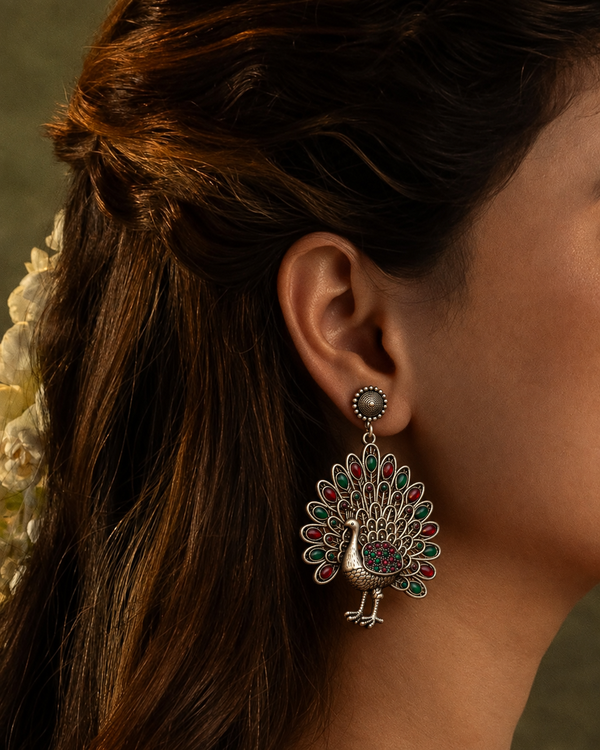
The Mayura Peacock Meenakari Jhumkas are a classic example, with hand-set meenakari enamel in peacock green and ruby and a cascade of pearl drops.
What is a chandbali?
Chandbali comes from chand, moon, and bali, earring. It is a crescent-shaped earring that sits below a stud, often finished with a fringe of beads, pearls or ghungroo. Chandbalis are associated with South Indian and Hyderabadi jewellery and are now worn across the country.
The Morni Kundan Chandbali Earrings place twin peacocks over an engraved crescent, with three tiers of chains and gold ghungroo.
Danglers, drops and studs
- Danglers hang in a line or in tiers and move freely. The Kamalini Lotus Jhumka Danglers combine a stud, a lotus panel and two mini jhumkas.
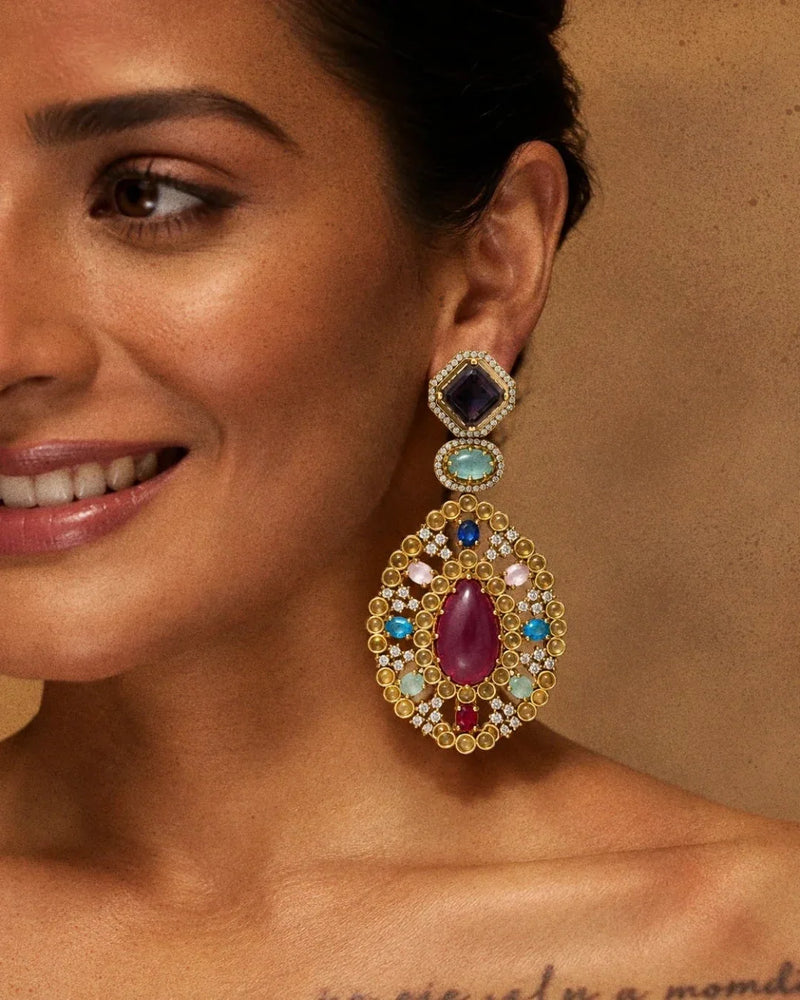
- Drops are linked tiers that end in a single focal stone, like the nine-colour Navrang Cabochon Drop Earrings.
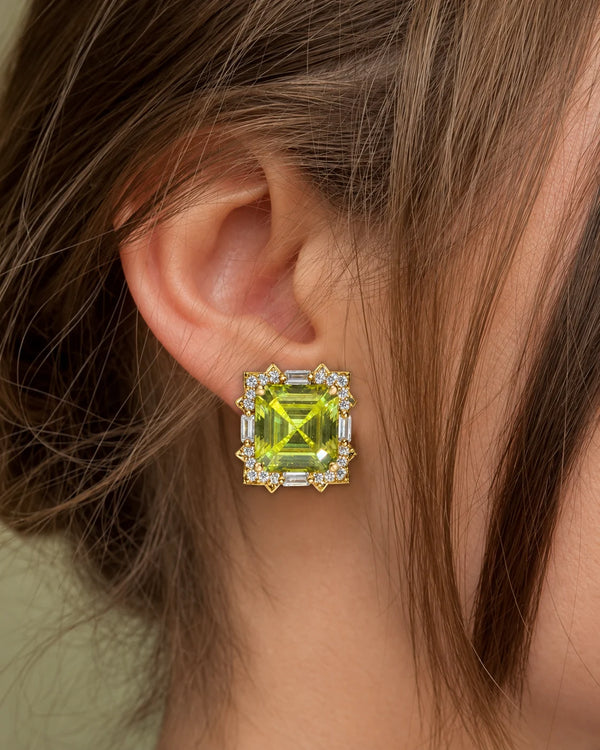
- Studs sit on the lobe. Statement studs such as the Sitara Asscher Halo Studs or the Gulnaar Crystal Cluster Studs give sparkle without weight.
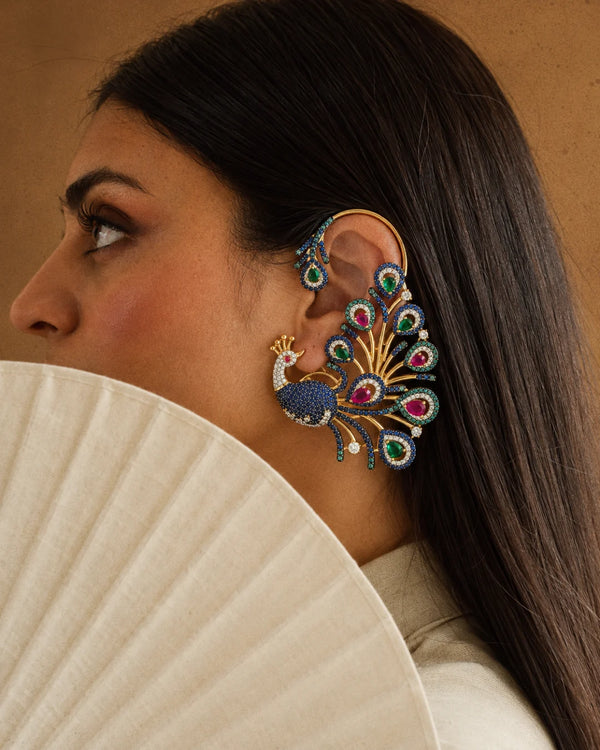
- Ear cuffs wrap the ear. The Royal Bengal Heritage Peacock Ear Cuff runs from lobe to upper ear, sold as a left and right pair.
Which earring suits which face shape?
| Face shape | Try | Why |
|---|---|---|
| Round | Long danglers and drops | Vertical lines lengthen the face |
| Oval | Almost anything, especially jhumkas | Balanced proportions carry every shape |
| Square | Chandbalis and curved jhumkas | Curves soften a strong jaw |
| Heart | Chandbalis and wider-bottomed drops | Width at the jaw balances a broader forehead |
| Long | Statement studs and short jhumkas | Width at the lobe shortens the line |
Face shape is a guide, not a rule. The earring you feel best in is the right one.
Which earring for which occasion?
- Wedding ceremony: chandbalis or large jhumkas, often with a matching maang tikka.
- Sangeet and mehendi: danglers and jhumkas that move when you dance.
- Reception: statement studs or drops with a sleek hairstyle.
- Festive dinners and pujas: mid-size jhumkas or coloured studs.
How to wear heavier earrings comfortably
- Look for lightweight construction and secure push-back closures.
- Use ear-lobe support patches for long evenings if you have sensitive lobes.
- Put earrings on after hair and make-up so they do not catch.
- Take them off before you sleep and store them flat in their pouch.
Questions we hear often
What is the difference between a jhumka and a chandbali?
A jhumka is bell-shaped and hangs vertically. A chandbali is a flat crescent shape that sits wider below the stud.
Are jhumkas only for traditional outfits?
No. A small jhumka works with a kurta, a shirt dress or even denim for a festive brunch.
Can I wear an ear cuff with other earrings?
A full-ear cuff is a statement on its own, so wear it with bare lobes or a tiny stud.
Browse all UTSAV earrings, from studs to chandbalis, or read our guide to what to wear to a sangeet.
Shop the story
The pieces in this story
Any 2 save 10% · any 3 or more save 15% with Stack & Save.