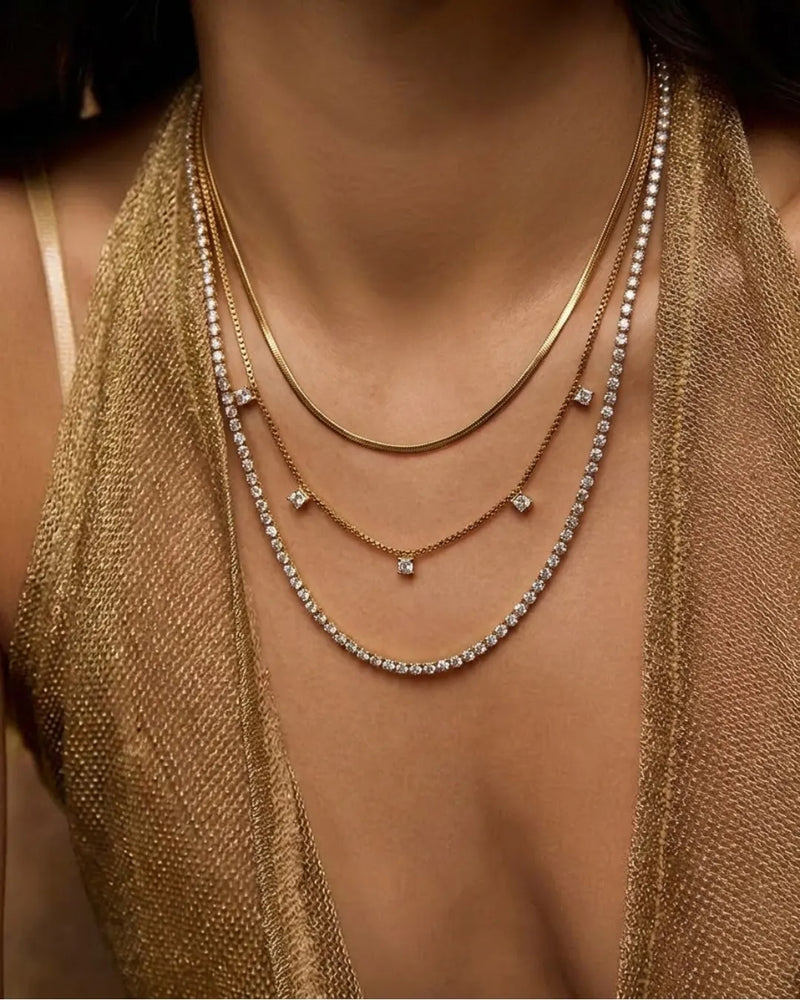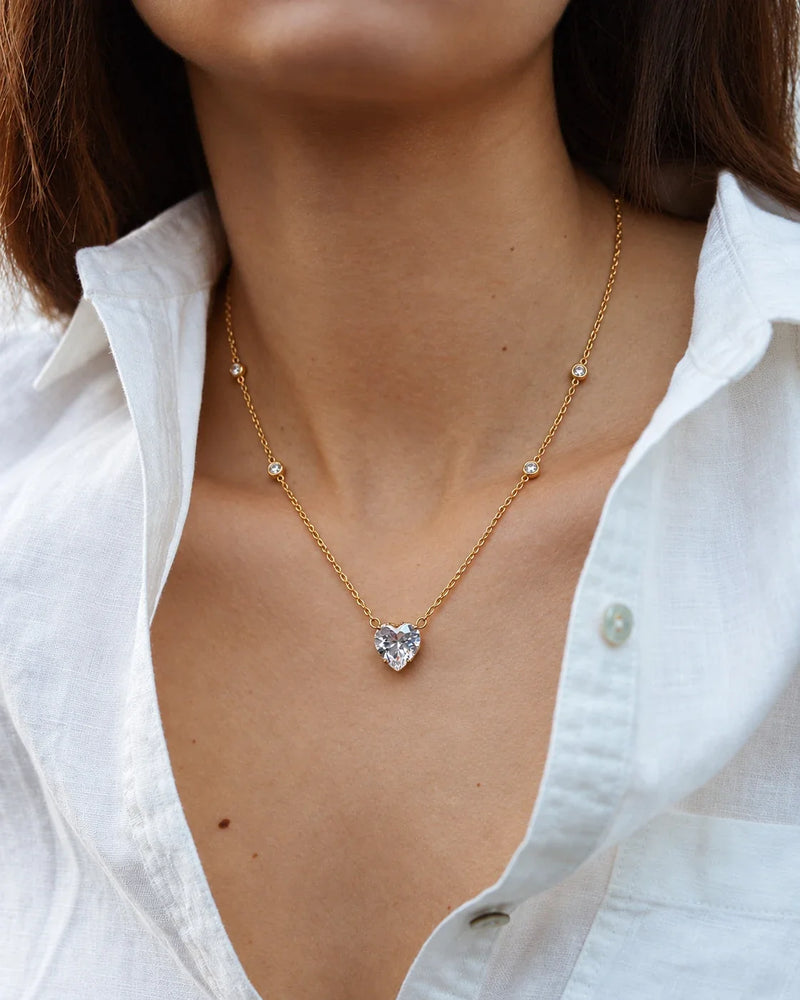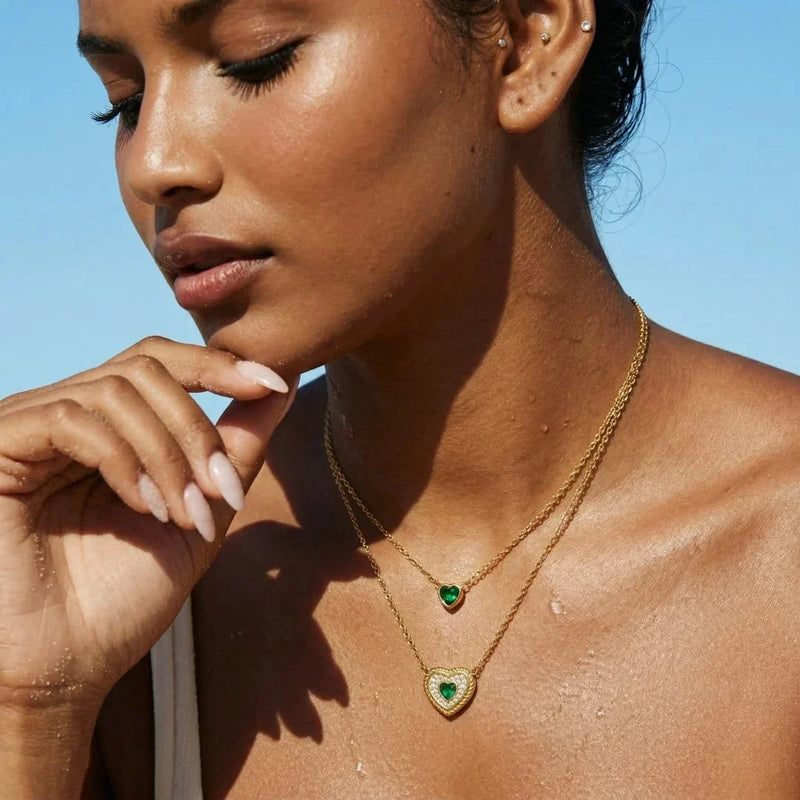
316L stainless steel
The Complete Guide to Waterproof Jewellery in India (2026)
Everything you need to know about waterproof jewellery in India — what it is, how it works, which materials last, and why most gold-plated jewellery fails in Indian conditions.
By Priskel Jewellery 8 min read

By Rajan Chauhan, Founder — Priskel Jewellery | Published June 2026
Waterproof jewellery in India is not a luxury — it is a necessity. If you have ever loved a piece of jewellery and watched it turn green by August, lose its shine after a week of daily wear, or leave a dark mark on your wrist after a gym session, you already understand the problem. India's climate — the monsoon humidity, the summer heat, the hard water in most cities — is one of the most demanding environments for jewellery in the world. Most jewellery is not built for it.
This guide explains exactly what waterproof jewellery is, how it works, which materials actually hold up in Indian conditions, and what to look for before you buy.
What is waterproof jewellery?
Waterproof jewellery is jewellery that does not tarnish, rust, fade, or lose its colour when exposed to water, sweat, humidity, or daily wear. Unlike regular fashion jewellery — which uses a thin layer of gold or silver plating over a base metal like brass or copper — waterproof jewellery is built from corrosion-resistant materials that do not react with moisture.
True waterproof jewellery can be worn in the shower, during workouts, in the rain, and through India's entire monsoon season without any change in appearance. The key is the combination of base metal and coating technology used.
Why does most jewellery tarnish in India?
Most fashion jewellery sold in India uses brass or copper as the base metal, with a thin layer of gold electroplating on top. This plating is typically 0.5 to 1 micron thick — thinner than a human hair. In Indian conditions, it fails fast.
Monsoon humidity. Coastal cities like Mumbai, Chennai, and Kochi regularly hit 80–90% relative humidity between June and September. This moisture penetrates the microscopic gaps in thin electroplating and begins oxidising the base metal underneath — causing tarnishing, darkening, and the green marks left on your skin.
Summer sweat. Sweat contains salt, urea, and fatty acids. These accelerate the breakdown of standard gold plating, especially during physical activity. A piece that lasts six months in a temperate climate may tarnish in six weeks in Delhi or Hyderabad summers.
Hard water. Most Indian cities have hard water — water high in calcium and magnesium. Showering or washing hands while wearing jewellery exposes it to these minerals repeatedly, dulling the finish and weakening the plating over time.
Daily, all-day wear. Indian women wear jewellery constantly — not just for occasions. The friction of everyday wear, combined with the above factors, means most jewellery simply does not last.
What materials make jewellery genuinely waterproof?
316L Surgical Stainless Steel is the gold standard for waterproof jewellery. It contains chromium, nickel, and molybdenum — the same material used in surgical instruments and medical implants. It does not rust, corrode, or react with sweat, water, or skin. The "L" stands for low carbon, making it significantly more corrosion-resistant than cheaper grades.
PVD Coating (Physical Vapour Deposition) is the technology that gives waterproof jewellery its gold colour without the weaknesses of standard electroplating. In PVD, gold is vaporised in a vacuum chamber and deposited onto the steel surface at a molecular level — creating a bond that is 3 to 5 times harder and 3 to 8 times thicker than conventional plating. At Priskel, we use 3-micron PVD — among the thickest available in Indian demi-fine jewellery.
What to avoid: Brass-base jewellery with standard electroplating, copper-base jewellery, alloy-base jewellery marketed as "anti-tarnish," and any jewellery that does not specify its base metal clearly.
PVD coating vs standard gold plating — what is the difference?
| Standard Electroplating | 3-Micron PVD Coating | |
|---|---|---|
| Thickness | 0.5–1 micron | 2–3 microns |
| Bond type | Surface deposit | Molecular bond |
| Durability | 3–12 months | 3–5 years |
| Water resistance | Low | High |
| Sweat resistance | Low | High |
| Base metal (typical) | Brass or copper | 316L stainless steel |
| Hypoallergenic | Often no | Yes |
| Tarnish resistance | Poor | Excellent |
Is waterproof jewellery the same as demi-fine jewellery?
Not exactly, but the two categories often overlap in India. Demi-fine jewellery sits between cheap fashion jewellery (under ₹500, brass-based) and fine jewellery (solid gold, above ₹15,000). It uses quality base metals and thicker plating, designed to last years rather than months.
In India, the best demi-fine jewellery brands use 316L stainless steel or 925 sterling silver as the base, with 18K PVD coating. This produces jewellery that looks like fine gold, lasts like fine gold, but costs a fraction of the price. Waterproof jewellery built on 316L steel with PVD coating is demi-fine by definition — the category Priskel operates in.
Can you wear waterproof jewellery in the shower, gym, and swimming pool?
Shower: Fully safe. Soap, shampoo, and water have no effect on 316L steel or PVD coating.
Gym: Fully safe. Sweat does not tarnish or corrode 316L steel or PVD-coated jewellery. Many Priskel customers wear their pieces 24/7 through workouts.
Swimming pool: Safe for occasional swims. Prolonged exposure to chlorinated water may very gradually affect PVD coating over years of frequent use, but occasional pool use is completely fine.
Sea/ocean: Fully safe. Salt water does not corrode 316L stainless steel.
Monsoon rain: Fully safe. This is precisely what Priskel jewellery is designed for.
What is a Lifetime Colour Guarantee?
A Lifetime Colour Guarantee is a brand's commitment that the colour of their jewellery will not fade for as long as you own it. Priskel backs every piece with a Lifetime Colour Guarantee that has no expiry date — made possible by our 3-micron 18K PVD coating on 316L surgical stainless steel.
If you have bought jewellery before and watched it lose its colour within months, a Lifetime Colour Guarantee changes the economics completely. You buy once and keep it.
How to identify genuinely waterproof jewellery before buying
Before purchasing any jewellery marketed as "waterproof" in India, check these five things:
1. Base metal: Must say 316L stainless steel. If it says "alloy," "metal," or "gold-tone," it is not waterproof jewellery.
2. Coating type: Look for "PVD" or "Physical Vapour Deposition." "18K gold plated" without PVD means standard electroplating.
3. Coating thickness: Quality PVD is 2–3 microns. Anything below 1 micron is standard plating regardless of what it is called.
4. Guarantee: Brands confident in their waterproof claim back it with a warranty. No guarantee usually means no confidence in the product.
5. Transparency: Read the full product description. Some brands claim "18K gold plated" in ads while the product page quietly says "gold tone" or "base metal."
Frequently Asked Questions
What is waterproof jewellery?
Waterproof jewellery is jewellery made from corrosion-resistant materials — typically 316L surgical stainless steel with PVD coating — that does not tarnish, rust, or fade when exposed to water, sweat, or humidity. Unlike regular gold-plated jewellery, it is designed for daily all-day wear in any conditions.
Why does jewellery tarnish in India specifically?
India's combination of monsoon humidity (up to 90% in coastal cities), summer heat, hard water, and the culture of wearing jewellery daily creates one of the most demanding environments for jewellery in the world. Standard gold-plated brass jewellery cannot withstand these conditions for more than a few weeks to months.
Is 316L stainless steel jewellery safe for sensitive skin?
Yes. 316L surgical stainless steel is the same material used in medical implants and surgical instruments. It is nickel-safe, hypoallergenic, and does not cause skin reactions — making it one of the safest metals for people with metal allergies.
What is the difference between PVD coating and gold plating?
Standard gold plating deposits a thin layer (0.5–1 micron) of gold through an electrochemical process. PVD fuses gold to the metal at a molecular level in a vacuum chamber, creating a coating 3 to 8 times thicker and significantly harder. PVD lasts 3–5 years of daily wear versus 3–12 months for standard plating.
Can I wear waterproof jewellery to the gym?
Yes. Sweat does not affect 316L stainless steel or PVD-coated jewellery. Many Priskel customers wear their pieces 24/7 through workouts without any change in appearance.
What does a Lifetime Colour Guarantee mean?
A Lifetime Colour Guarantee means the brand commits that the gold colour of your jewellery will not fade for as long as you own it. Priskel's Lifetime Colour Guarantee carries no expiry date and is backed by 3-micron PVD coating on 316L surgical stainless steel.
How do I know if jewellery is genuinely waterproof before buying?
Check the base metal (must be 316L stainless steel), the coating type (must say PVD), the coating thickness (2–3 microns minimum), and whether the brand offers a tarnish warranty. Transparent brands list all of this clearly on their product pages.
Where can I buy waterproof jewellery in India?
Priskel (priskel.com) offers 86 styles of 100% waterproof jewellery — necklaces, earrings, bracelets, rings, and anklets — all with a Lifetime Colour Guarantee and free shipping across India.
Shop the range: waterproof necklaces, bracelets, earrings, rings and Priskel Black for men — all 316L surgical stainless steel with 3-micron 18K gold PVD, backed by the Lifetime Colour Guarantee. Free shipping across India.